
Letters and the Language of Love
By Sunaina Jain
Rediscover a transformative joy – one that lingers long after the words are written.
A few days ago, I received a hand-written letter along with Jaun Elia’s poetry book as a gift by a promising scholar and colleague of mine. This precious gift, neatly tucked inside a neat envelope, filled me with profound emotion. It stirred something deep within – gratitude and reverence for all the people who still believe in the soulful art of letter writing.
As much as I marvelled at the heartfelt contents of the letter, I was compelled to go down the memory lane when writing letters to friends and off-shore relatives was a cherished ritual. I enjoyed the anticipation of opening an envelope, and the quiet delight of reading words written especially for you. These seemingly insignificant moments carried profound joy. Susan Lendroth beautifully observed: “To write is human, to receive a letter: Divine!” I remember my pen pals from different places and the thrill of exchanging letters that sometimes read like documents of cross-cultural exchange.
Perhaps this nostalgia explains an activity that I repeat in my classes every year. I ask students to write anonymous letters during the class itself. These letters are then shuffled and read aloud, without anyone claiming them. The exercise does more than revive the fading art of letter writing; it often becomes cathartic and therapeutic for many. Hostelers write to their parents expressing love and longing, friends write to those they have lost touch with, and some students even write letters to their younger selves. Occasionally, they write to me as well. Each time the outcome is exhilarating and deeply gratifying, quietly reinforcing my belief that sometimes we need not “see the whole staircase, just take the first step.”
Like many other art forms struggling for survival in a digital age, letter writing has been overshadowed by social media messages, blog posts, emails and many quick-fix forms of correspondence. Letters, however, remain something entirely different. They are intimate, personal, liberating – weaving together the sanctum of words and soul of the writer. They become a safe haven for emotions and, for the receiver, a priceless reassurance that he or she truly matters.
Bubbling with variety, some letters are seductive and charming – inviting the readers to savour them slowly, like a rich dessert that leaves a lingering after-taste in our mouths. Some carry warmth, like the slanting late afternoon rays of the sun. Some are soul-searching, some intimate and nostalgic like a cozy sweater; and some may be revelatory – illuminating a moment like a sudden lightbulb of understanding.
As a literature enthusiast, I must admit that letters hold an even deeper significance. Literature and letters are, in many ways, close cousins. Writers have long experimented with the format and trope of letters, giving rise to the genre of epistolary novels. Works such as Samuel Richardson’s Pamela and Alice Walker’s The Color Purple have often played an integral role in fathoming the inner worlds of the characters – their drives, motivations, struggles, and desires. R.K. Narayan’s beloved character Swami wrote multiple letters to his friends and grandfather, capturing his innocence and playful spirit, turning him into a relatable character for readers across ages.
Often, letters have been used as a trope to keep up the suspense as it carries within it the power of transforming fates of its characters, for example, In Thomas Hardy’s Tess of the D'Urbervilles, Tess writes a letter to her would-be husband Angel explain her past with the debauched Alec, which she slips under his door. However, in this case, the letter containing the truth is actually swept under the carpet, and tragically transforming the course of her life.
Beyond fiction, the personal letters of great writers offer rare glimpses into their lives. The deeply moving and insightful collection Dastavez captures the quiet yet resilient love shared between two iconic souls – Amrita Pritam and Imroz. Similarly, the witty correspondence of Oscar Wilde and the engaging letters of Saul Bellow continue to fascinate readers for their candour and creativity.
All said and done, letters remain what Alexandra Stoddard once called “a blessing” and “an exalted experience.” As Lord Byron aptly described a letter as “a device for combining solitude with good company.” In a world brimming with AI generated texts and messages, physical letters continue to carry memory, remembrance, love, and heartfelt emotions. The musky smell of old letters and the lingering fragrance of the words preserved and pickled like a harvest often act as true anchors for a heart carrying a storm.
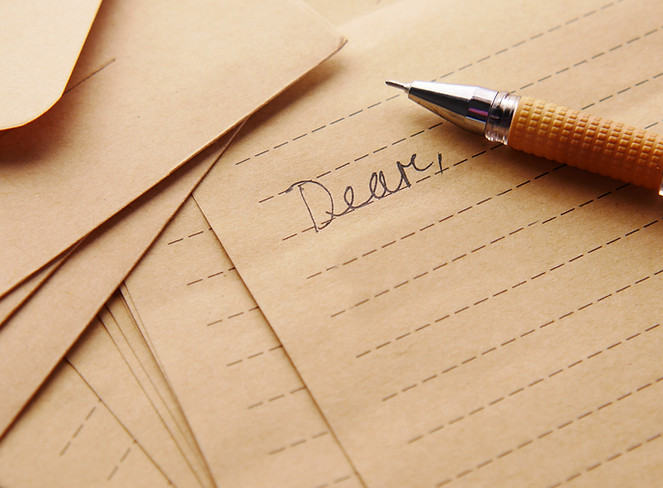
So, the next time, when you want to tell someone how much he or she is valued, resist the temptation of a quick whatsapp message. Instead, take out a sheet of paper and a pen, and write a letter. In doing so, you may rediscover a transformative joy – one that lingers long after the words are written.

Dr. Sunaina Jain is working as an Asst. Professor (English) at Mehr Chand Mahajan DAV College for Women, Chandigarh. Her poetry collection titled The Patchwork Quilt (2024), published by Writers Workshop, Kolkata, has been selected as the Best Book 2024 in English Poetry Category by Chandigarh Sahitya Akademi. The book was longlisted in two categories – Debut Author and English Poetry – for the KALA Literature Awards held in New Delhi in February 2026. Her poetry has also got published in international anthologies like Shout it Out (Lost Tower Publications, London), Aquillrelle and Amravati Poetic Prism. She is the Editor of the Book Review section of Muse India and also guest-edited the special May-June 2022 Issue of Muse India on “Ethics and Politics of Cultural Memory”.