
Beyond the Billion Dollar Hammer: The Real State of the Art Market
Auction Houses have recently been selling paintings for millions of dollars. Harmeet Singh takes a look at the real state of the Art market
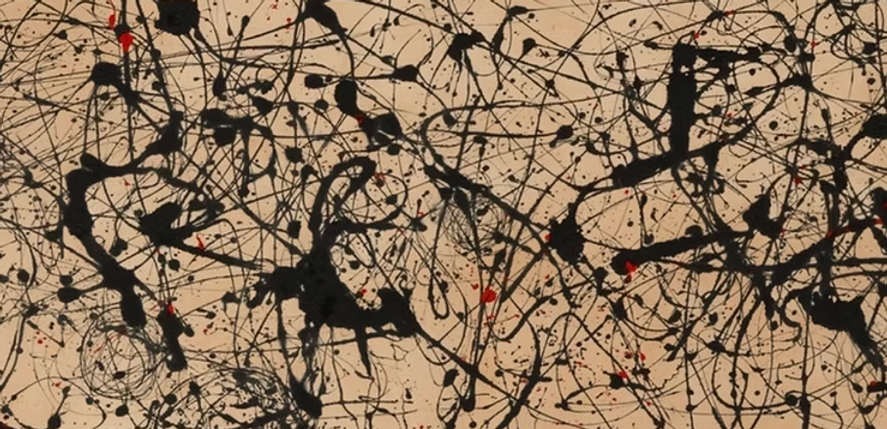
The international art world loves a loud headline. The media recently buzzed with news from the big New York auction houses. Reports stated that seventeen new artist records were broken in a single week. We saw a Jackson Pollock painting sell for over one hundred and eighty million dollars. A Mark Rothko piece went for nearly one hundred million dollars. On paper, it looks like a gold rush. It sounds like the global art market is roaring back to life with unstoppable energy.
But if you look past the glitter, the reality is completely different. This big news does not mean the art world is healthy.It means a very small group of wealthy people are playing a very specific game.
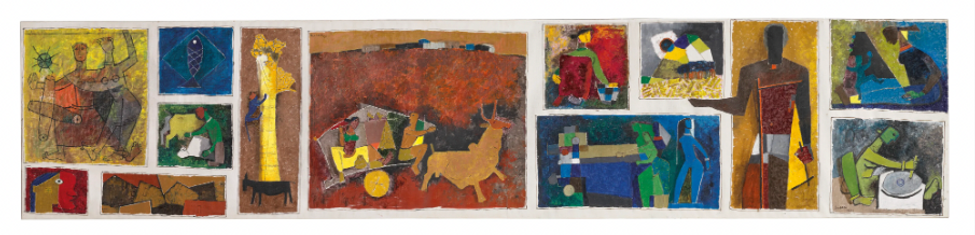
At the exact same time, a separate historic event took place in India. A painting by Raja Ravi Varma sold for over one hundred and sixty-seven crore rupees. Shortly before that, a massive canvas by M.F. Husain fetched over one hundred and eighteen crore rupees.
Why is one market full of smoke and mirrors while the other is driven by deep cultural pride? What does this mean for the thousands of living artists who still struggle to pay rent? The art market is splitting in two. The old ways of selling art are failing, and a new, human scale economy is taking its place.
The Illusion of the Big Auction
To understand why the Western auction numbers are misleading, you have to look at how these sales are made. The million dollar bidding wars you see on television are mostly theater.
Today, more than half of the expensive paintings sold at major auctions are already bought before the auctioneer lifts the hammer. This happens through a system called third party guarantees. A wealthy backer promises the auction house that they will buy the painting for a set minimum price. If no one else bids, that backer gets the art. Because of complex financial deals and hidden fees, the backer often pays much less than the public headline price.
These big auctions are not a sign of a healthy market. They are a sign of rich people looking for safe places to hide their wealth. When a rare masterpiece from a famous private collection comes up for sale, billionaires buy it because it is safer than real estate or stocks. This does not help living artists. It keeps the money flowing in a tiny, closed circle of dead masters and ultra rich buyers. Outside of that circle, the rest of the art market is much quieter and far more cautious.
The Organic Indian Boom
The story changes when we look at Indian art. The massive prices we are seeing for Indian masters are not artificial.They are driven by actual scarcity and intense local demand.
Consider the recent sale of Raja Ravi Varma’s oil painting, Yashoda and Krishna. It sold at a domestic auction for a record breaking sum. It was bought by a prominent Indian industrialist who publically promised to keep the work available for regular public viewing. Before that, M.F. Husain’s fourteen foot masterpiece, Gram Yatra, was bought by a major domestic art philanthropist for a private museum in Delhi.
This is not speculation. This is a cultural correction. For decades, Indian modern art was priced much lower than Western or Chinese art. Now, India’s growing economic strength is changing the dynamic. Successful entrepreneurs and corporate leaders want to buy back their own history.
There is another unique rule that keeps the Indian market honest. The Indian government protects works by historical masters. These pieces are classified as National Art Treasures. By law, they cannot leave the country. This means global billionaires in New York or London cannot bid on them. Despite being cut off from the global pool of wealth, domestic bidding wars are pushing prices to historic heights. This proves that the local demand is authentic. Indians are buying Indian art out of genuine respect for their heritage.

Yashoda & Krishna by Ravi Varma
The Reality for Emerging Artists
While dead masters break records, the story for living, newer artists is completely different. The everyday art world is not a free market. It is a strictly controlled system managed by a few powerful people.
For a long time, mega galleries, elite curators, and high profile art critics acted as the ultimate gatekeepers. They decided who got a gallery show, who got written about, and who became famous. This system created a brutal pyramid.A tiny fraction of artists received all the money and attention, while the remaining ninety-nine percent struggled to survive.
The financial reality for a young artist is incredibly tough. When an artist gets a show in a traditional gallery, the gallery takes a fifty percent commission on every sale. The artist has to use their remaining share to pay for studio rent, raw canvas, expensive oil paints, framing, and shipping.
At the same time, the mid tier galleries are disappearing. These were the neighborhood spaces that used to support young artists as they grew. High commercial rents and the cost of traveling to international art fairs have forced many of these smaller galleries to close. Without this middle step, newer artists find themselves stuck at the bottom with no clear way to move up.
The gatekeepers also use complex language and manufactured theories to create value. They write essays full of heavy jargon that makes everyday people feel unwelcome. If an artist’s work does not fit a specific political or academic trend favored by curators that season, that artist is often ignored. This system leaves thousands of talented painters, sculptors and printmakers completely out in the cold.
Gram Yatra by MF Hussain
The Digital Rebellion
Because the traditional system is so exclusive, a major shift is happening. Living artists are no longer waiting to be noticed by elite galleries. They are using everyday technology to build their own paths.
Instagram and WhatsApp have become the ultimate tools for changing how art is bought and sold. They have removed the middleman entirely.
Instagram acts as a global, open air portfolio. In the old days, you had to walk into a cold, intimidating gallery to see new art. Now, you can see an artist's entire creative journey on your phone. Artists use videos to show their messy studios, their raw techniques, and their daily lives. They explain their inspirations in plain, simple language. This builds a human connection. People are not just buying a piece of canvas; they are buying into the artist’s life and dedication.
If Instagram is the window display, WhatsApp is the private closing room. Once a collector expresses interest on social media, the conversation moves to a personal chat. The artist can send a quick voice note explaining a painting. They can text a short video showing how the paint looks in morning light. This creates a friendly, comfortable space for buying art.
Through these apps, an artist can sell a painting directly to a collector and keep the entire profit. They do not have to give up half of their income to a gallery. This model has created a thriving middle class for the art world. A graphic designer in Mumbai or a teacher in Bangalore can become a patron of a living painter. This approach makes art accessible to everyone.
The Way Forward
The future of art is not about repairing the old elite system. It is about expanding this new, decentralized economy. The art world is changing shape, and the path forward is clear for artists, collectors, and institutions.
First, artists must think like independent creators. They cannot rely on a single gallery for their income. The most resilient artists are diversifying their work. They might sell one large, expensive oil painting to a serious collector once a year. At the same time, they can offer high quality prints, small sketches, or monthly studio memberships for a fraction of the price. This approach creates a steady, predictable income. It allows them to focus on making art without constant financial panic.
Second, collectors are changing how they spend their money. A new generation of younger buyers is entering the market. They do not care about the opinions of snobbish critics. They want to buy art that moves them personally. They are focusing on art priced under fifty thousand rupees, or under a few thousand dollars. They are buying directly from local studios and independent pop up markets. For these buyers, supporting a living artist brings far more joy than buying an expensive asset for a corporate office.
Third, the style of art is changing in response to modern life. We are seeing a massive turn away from digital screens and artificial images. People are tired of looking at flawless, computer generated graphics. There is a deep hunger for things made by human hands.
This has led to a major revival in traditional crafts. Collectors are looking for thick, textured oil paintings where you can see the heavy stroke of the brush. They want irregular ceramics, hand woven textiles, and raw paper prints. They want to feel the physical presence of the artist in the work.
A Humane Art World
The hype of the billion dollar auction rooms is a distraction. The true vitality of the art world is happening far away from those elite spaces. It is alive in the studios of independent painters who use social media to find their audience. It is alive in the domestic auctions of India, where historic masterpieces are brought home to be shared with the public. It is alive in the small, local art communities that choose connection over corporate speculation. The gatekeepers are losing their absolute power. The future of art belongs to a simpler, more honest relationship between the person who creates and the person who appreciates. By focusing on human scale stories, fair pay for living creators, and the undeniable beauty of handmade work, we can build an art world that is open, sustainable, and truly wise.
About the Author
Harmeet Singh is a medical doctor by qualification, a bureaucrat by profession, and now a filmmaker and practising artist of repute