The Interview

Amitav Ghosh
An Award-winning Writer
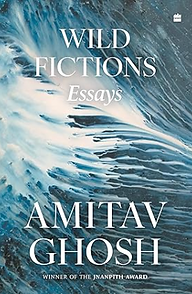
Rachna Singh, Editor, The Wise Owl talks to Amitav Ghosh an acclaimed author with several award-winning titles to his credit. He authored several compelling books such as The Circle of Reason, The Shadow Lines, The Glass Palace, The Hungry Tide, and The Ibis Trilogy, consisting of Sea of Poppies, River of Smoke and Flood of Fire. His most recent books are Wild Fictions: Essays and Ghost Eye.
The Circle of Reason was awarded France’s Prix Médicis in 1990, and The Shadow Lines won two prestigious Indian prizes the same year, the Sahitya Akademi Award and the Ananda Puraskar. The Calcutta Chromosome won the Arthur C. Clarke award for 1997 and The Glass Palace won the International e-Book Award at the Frankfurt book fair in 2001. In January 2005 The Hungry Tide was awarded the Crossword Book Prize, a major Indian award. His novel, Sea of Poppies (2008) was shortlisted for the Man Booker Prize, 2008 and was awarded the Crossword Book Prize and the India Plaza Golden Quill Award. The Great Derangement: Climate Change and the Unthinkable, a work of non-fiction, was published by the University of Chicago Press in 2016 and was given the inaugural Utah Award for the Environmental Humanities in 2018. His book, Wild Fictions: Essays has been awarded The Wise Owl Literary Award 2026 in the Non-Fiction category.
Amitav Ghosh holds five Lifetime Achievement awards and eight honorary doctorates. In 2007 he was awarded the Padma Shri, one of India’s highest honors, by the President of India. In 2010 he was a joint winner, along with Margaret Atwood of a Dan David prize, and 2011 he was awarded the Grand Prix of the Blue Metropolis festival in Montreal. In 2018 the Jnanpith Award, India’s highest literary honor, was conferred on Amitav Ghosh. He was the first English-language writer to receive the award. In 2019 Foreign Policy magazine named him one of the most important global thinkers of the preceding decade. In 2024 Amitav Ghosh was awarded the Erasmus Prize and was also elected to the American Academy of Arts and Sciences.
The Interview : Amitav Ghosh
Rachna Singh, Editor, The Wise Owl talks to Amitav Ghosh an acclaimed author with several award-winning titles to his credit. He authored several compelling books such as The Circle of Reason, The Shadow Lines, The Glass Palace, The Hungry Tide, and The Ibis Trilogy, consisting of Sea of Poppies, River of Smoke and Flood of Fire. His most recent books are Wild Fictions: Essays and Ghost Eye.
The Circle of Reason was awarded France’s Prix Médicis in 1990, and The Shadow Lines won two prestigious Indian prizes the same year, the Sahitya Akademi Award and the Ananda Puraskar. The Calcutta Chromosome won the Arthur C. Clarke award for 1997 and The Glass Palace won the International e-Book Award at the Frankfurt book fair in 2001. In January 2005 The Hungry Tide was awarded the Crossword Book Prize, a major Indian award. His novel, Sea of Poppies (2008) was shortlisted for the Man Booker Prize, 2008 and was awarded the Crossword Book Prize and the India Plaza Golden Quill Award. The Great Derangement: Climate Change and the Unthinkable, a work of non-fiction, was published by the University of Chicago Press in 2016 and was given the inaugural Utah Award for the Environmental Humanities in 2018. His book, Wild Fictions: Essays has been awarded The Wise Owl Literary Award 2026 in the Non-Fiction category.
Amitav Ghosh holds five Lifetime Achievement awards and eight honorary doctorates. In 2007 he was awarded the Padma Shri, one of India’s highest honors, by the President of India. In 2010 he was a joint winner, along with Margaret Atwood of a Dan David prize, and 2011 he was awarded the Grand Prix of the Blue Metropolis festival in Montreal. In 2018 the Jnanpith Award, India’s highest literary honor, was conferred on Amitav Ghosh. He was the first English-language writer to receive the award. In 2019 Foreign Policy magazine named him one of the most important global thinkers of the preceding decade. In 2024 Amitav Ghosh was awarded the Erasmus Prize and was also elected to the American Academy of Arts and Sciences.
Thank you so much for accepting our request for an interview Mr Ghosh. We are indeed honoured and privileged.
RS: I have just finished your latest book Ghost Eye and enjoyed every minute of the compelling narrative. In Ghost Eye, a three-year-old’s insistence that she remembers another life unsettles both her family and her psychiatrist. What drew you to this premise?
AG: Thank you, I’m delighted the narrative resonated with you. What interests me about past life memories is that this phenomenon throws the linear conception of time, which is so fundamental to modernity, into question. It also challenges the idea that individuals are discrete entities. A three year old child exists in a pre-socialized state; she hasn’t yet learned the adult grammar of what is "possible" or "real." Her insistence on another life creates a rupture in the mundane—it forces the adults, particularly Shoma, the psychiatrist, to confront phenomena that their training and rationalist worldview cannot accommodate. It forces her to ask: what if reality is not what we imagine it to be.
RS: The novel Ghost Eye moves between late-1960s Calcutta and present-day Brooklyn, linking Varsha and Dinu’s story to contemporary environmental activism. Why was it important for you to connect a deeply personal story with today’s climate anxieties? Do you see activism as a form of remembering — a way of confronting what history has buried?
AG: The Italian philosopher Giorgio Agamben, says that the most important question to ask ourselves at this moment in time is: what remains? In other words, what is left of a world that was once sustainable? At this point in my life, this is indeed a very pressing question for me. It is a pressing question also for many indigenous peoples who have seen their worlds being destroyed in the same way that the whole world is seeing now. But then there are many other kinds of activists as well, for example, those who are data driven and want to implement technological solutions.
RS: In The Great Derangement: Climate Change and the Unthinkable, you questioned whether the modern novel could adequately address climate change. In your novel Ghost Eye you have your characters confronting planetary crisis and looking for an unusual resolution. Could you throw light on the new narrative tools you used in Ghost Eye to bring the planetary crisis into the everyday lives of your characters?
AG: The modern novel, with its focus on individual moral drama, is centered on the human in a way that earlier narrative modes were not. In the Mahabharata for example, or the Iliad, there are all kinds of non-human voices and characters. Modernity, and the kind of rationality on which it is founded, is also profoundly human centered, and in a sense, this has led directly to our present planetary crisis. As a writer, I believe it is very necessary to decenter the human and to return to modes of writing that can accommodate non-human entities and voices. The story of Ghost-Eye is my attempt to do exactly that.
RS: Migration has long been central to your fiction as well as non-fiction works. As climate change accelerates displacement, how do you think literature can help readers understand migration not as crisis alone, but as part of a longer historical continuum shaped by trade, empire, and extraction?
AG: I am from a family of migrants. My father's family migrated from present day Bangladesh to Bihar in the 19th century and that original uprooting led to many other migrations. But my family's experience is far from unusual. Today we are living in a world of constant churn with great masses of people migrating within the country and also moving abroad. These population flows are likely to increase as environmental breakdown intensifies because migration is an adaptive strategy. It's quite possible that many people will adopt a nomadic way of life.
RS: Talking about your award-winning book ‘Wild Fictions: Essays’ you say that “re-examining our past fictions is not merely an academic exercise but an essential and urgent act of retrieval.” Could you elaborate on this please. Is this also your take away for the readers of Ghost Eye?
AG: The way we understand the world, our place in it, and our relationship to others is shaped by the fictions we inherit—from religious texts to national epics to family lore. But these fictions are not neutral. They have built into them certain ways of seeing and, crucially, certain ways of not seeing. The great imperial fictions, for example, taught generations to see the non-European world as empty, backward, or simply as a resource to be exploited. If we are to build a more just and sustainable world, we must first dismantle these old stories and see through the lies they told us. We must retrieve the voices they silenced, the perspectives they erased. This is a matter of great urgency because these old fictions have a material weight; they are embedded in our laws, our economies, our cities.
For the readers of Ghost Eye, I hope this act of retrieval happens on multiple levels. I hope they retrieve a sense of a Calcutta that is both familiar and strange. I hope they retrieve the buried history of a family. And on the deepest level, I hope they retrieve a capacity for wonder—a willingness to entertain the possibility that the world is far more mysterious and interconnected than our daily fictions allow us to believe.
RS: Your novels weave together meticulous research, lived landscapes, and deeply human stories. When you begin a book like Ghost Eye, what usually comes first — a character, a historical moment, or an idea that refuses to let go? And how do you balance the demands of research with the freedom of imagination while shaping the narrative?
AG: It is different with each book. For Ghost Eye, it was a constellation of things: boyhood memories of Calcutta, a clinical paper I read about past-life memories in children, the growing anger I felt at our collective failure to act on the climate. None of these was the "first." They coalesced.
As for balancing research and imagination, I don't experience them as opposing forces. For me, research is what makes it possible to imagine a story. The more I know about a place, a time, a profession—be it psychiatry or paleobotany—the more my imagination has to work with. Simple details can suddenly take flight and become a metaphor, a plot point, or a revelation about the changing environment.
Thank you so much, Mr. Ghosh, for taking the time to speak with us about your work. It has been a privilege to engage with your ideas and reflections.
We wish you continued inspiration and success in all your creative and literary endeavours. Through your writing, you have powerfully drawn global attention to the climate crisis and its deep entanglement with history, migration, and human responsibility. For that, and for the conversations your work continues to inspire, we are truly grateful.
Some Works of Amitav Ghosh