The Interview
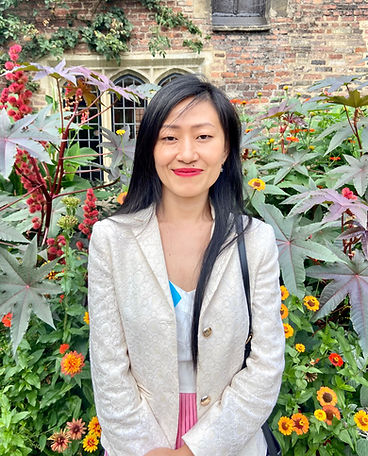
Subi Taba
An Award-winning Writer
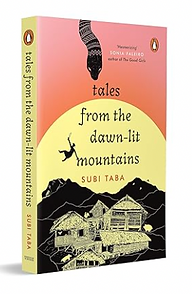
Rachna Singh, Editor, The Wise Owl talks to Subi Taba, a poet and writer from Arunachal Pradesh. Subi Taba's debut fiction, Tales from the Dawn-lit Mountains, a collection of folkloric and magical realist stories, won the Ramnath Goenka Sahithya Samman 2025 for Best Fiction and the AutHer Award Season 7 for Best Debut Author, and was shortlisted for multiple national honours including the Publishing Next Industry Award, the Ruskin Bond Literary Award, and the Kalinga Book Award. A fellow of South Asia Speaks and winner of Penguin Random House India’s The Perfect Pitch (Season 1), she has represented the Northeast on prominent cultural platforms and was a former titleholder of Mega Miss North East, Miss East Kameng, and Miss AAPSU. In 2026, she was honoured with the Women Achiever Award by IFCSAP(Indigenous Faith and Cultural Society of Arunachal Pradesh) and WWO(Women's Welfare Organisation) for her contributions to literature, culture, and public service.
The Interview : Subi Taba
Rachna Singh, Editor, The Wise Owl talks to Subi Taba, a poet and writer from Arunachal Pradesh. Subi Taba's debut fiction, Tales from the Dawn-lit Mountains, a collection of folkloric and magical realist stories, won the Ramnath Goenka Sahithya Samman 2025 for Best Fiction and the AutHer Award Season 7 for Best Debut Author, and was shortlisted for multiple national honours including the Publishing Next Industry Award, the Ruskin Bond Literary Award, and the Kalinga Book Award. A fellow of South Asia Speaks and winner of Penguin Random House India’s The Perfect Pitch (Season 1), she has represented the Northeast on prominent cultural platforms and was a former titleholder of Mega Miss North East, Miss East Kameng, and Miss AAPSU. In 2026, she was honoured with the Women Achiever Award by IFCSAP(Indigenous Faith and Cultural Society of Arunachal Pradesh) and WWO(Women's Welfare Organisation) for her contributions to literature, culture, and public service.
Thank you, Subi, for accepting our request for a conversation with The Wise Owl. Congratulations on being awarded the prestigious AutHer Award for your book Tales from the Dawn-lit Mountains.
RS: The worlds in Tales from the Dawn-lit Mountains feel deeply oral in texture—as though the stories are being spoken around a fire rather than written on a page. How did you bring the rhythms of oral storytelling into English without losing their cultural cadence?
ST: I grew up listening to stories rather than reading them first. In Arunachal, stories are often not delivered as finished literary objects; they unfold through pauses, repetitions, digressions, silences, and the teller’s changing voice. There is a certain breathing quality to oral storytelling that I wanted to preserve.
Writing in English posed both a challenge and an opportunity. English has its own rhythms, often more clipped and linear than the looping, incantatory quality of our oral narratives. I tried to carry over the cadence not by directly translating speech patterns, but by retaining the architecture of oral narration—the circular movement of memory, the gradual revelation, the sense that a story is being remembered into existence.
I was also careful not to over-explain cultural references for the sake of accessibility. I trusted the reader to enter the story as one enters an unfamiliar house: slowly, attentively, learning its rhythms from within. I think cultural cadence survives when the writer resists flattening it into explanation.
RS: Myth and realism coexist very naturally in your fiction. In stories involving spirit tigers, forest beings, or sacred curses, you do not explain the supernatural to the reader but effortlessly walk the reader into them so that the reader as well as the storyteller become a part of the story. Tell us what made you write from within the belief system. The inner gaze makes your book stand apart and I’m certainly not quibbling about that.
ST: Thank you for that generous reading. For me, writing from within the belief system felt like the only honest and natural way to tell these stories.
In many Indigenous cosmologies, the supernatural is not a separate category from reality. The visible and invisible worlds coexist, often in quiet negotiation. A spirit tiger, for instance, is not merely a symbolic device or an exotic embellishment; it belongs to a lived imaginative reality, one that shapes behaviour, ethics, memory, and collective understanding.
When stories from such worlds are translated through an outsider’s gaze, there is often an impulse to explain, justify, or anthropologise the supernatural. I wanted to resist that. Explanation can sometimes create distance. Instead, I wanted immersion.
To write from within the belief system is to trust its logic. It asks the reader to suspend not disbelief, but dominance—the assumption that only one way of knowing is valid. I think fiction becomes most powerful when it allows readers to inhabit another epistemology rather than merely observe it.
RS: Nature in your stories is not decorative; forests, rivers, animals, even silence carry narrative weight. Do you think literature from Arunachal, and perhaps from many Indigenous cultures, approaches ecology differently from mainstream Indian writing?
ST: I do think there is often a difference in orientation.
In much Indigenous storytelling, nature is not backdrop; it is presence. The forest is not scenery against which human drama unfolds—it is an active participant, sometimes witness, sometimes judge, sometimes ancestor. Rivers remember. Mountains hold memory. Silence itself can be communicative.
This comes from a worldview where human life is not imagined as separate from ecology. There is no strict hierarchy that places humans above the natural world. Instead, there is interdependence and reciprocity.
That said, I would hesitate to generalise too broadly. There is remarkable ecological sensitivity in mainstream Indian writing too. But what literature from Arunachal can perhaps offer is a more relational way of seeing—a reminder that landscape is not possession, but kinship.
At a time of climate crisis, these ways of imagining our place in the world are not merely literary; they may be urgently necessary.
RS: “Cobra Man” stands out for its wit and satire. Beneath the humour, however, lies a sharp comment on performance, masculinity, and instant celebrity culture. What made you weave together folklore and the modern addiction to social-media mores?
ST: “Cobra Man” emerged from observing how quickly spectacle has become currency in our times.
Social media rewards performance—often exaggerated, often absurd—and I was fascinated by how this intersects with older ideas of heroism and masculinity. In many traditional tales, physical prowess is tied to courage, responsibility, or communal service. Today, that performance is often detached from substance and redirected toward visibility itself.
Folklore gave me the perfect framework for satire because it already contains archetypes—the hunter, the trickster, the village hero. By placing these archetypes in a world obsessed with virality and instant validation, I could explore how ancient narratives of masculine power mutate in the digital age.
Humour was essential because satire can disarm where direct critique may harden. Laughter creates entry points for discomfort.
RS: Several stories quietly capture cultures in transition—traditional priesthoods losing relevance, old customs colliding with bureaucracy, younger generations negotiating modernity. As a writer, do you feel an urgency to archive these changing worlds before they disappear or transform beyond recognition?
ST: Yes, there is definitely a sense of urgency, though I would not call it nostalgia.
Cultures are living organisms; they must evolve. I am not interested in freezing traditions in an idealised past. What interests me is documenting the texture of transition—the ambiguities, tensions, losses, reinventions that occur when worlds change.
Arunachal today is negotiating multiple temporalities at once. Ancient rituals coexist with smartphones, oral memory intersects with administrative systems, and younger generations are constantly translating themselves between worlds.
As a writer, I feel compelled to witness this moment with honesty and tenderness. Literature can become an archive, yes, but not a museum archive. It can preserve movement, contradiction, becoming.
RS: Your prose is rich with visual detail—the movement of mist, forests, ornaments, animal imagery, mountain landscapes. Do images arrive before plot for you? Do talk to us a little about your creative process?
ST: Very often, stories begin for me as visual images.
It might be a man walking alone through fog at dawn, the glint of beads around an old woman’s neck, or the sound of a river moving through darkness. These images carry emotional charge before they carry narrative meaning.
I usually sit with an image for a long time, asking what memory, tension, or story it contains. Plot arrives later, almost as a way of understanding why that image insisted on being seen.
My process is intuitive at first and architectural later. I begin in a state of listening—allowing the atmosphere, voice, and sensory world to emerge. Once I have enough material, I become more deliberate, shaping structure and rhythm carefully.
For me, writing is both excavation and construction.
RS: Our readers would love to know if you are working on another book. When do we expect it in the bookstores?
ST: Yes, I am currently working on a new project that moves in somewhat different directions from Tales from the Dawn-lit Mountains while still remaining rooted in questions that deeply interest me—memory, longing, family, displacement, intimacy, and the complexities of human connection.
I am allowing these stories the time they need to find their final form, so I would hesitate to announce a firm publication date just yet. If all goes well, I hope readers may see the next book within the next couple of years. For me, each book must arrive only when it is fully ready to speak in its own voice.
Thank you Subi, for with The Wise Owl. We wish you the very best in all your literary and creative endeavours
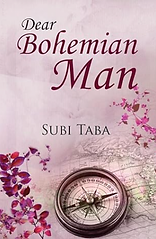
Some Works of Subi Taba