top of page
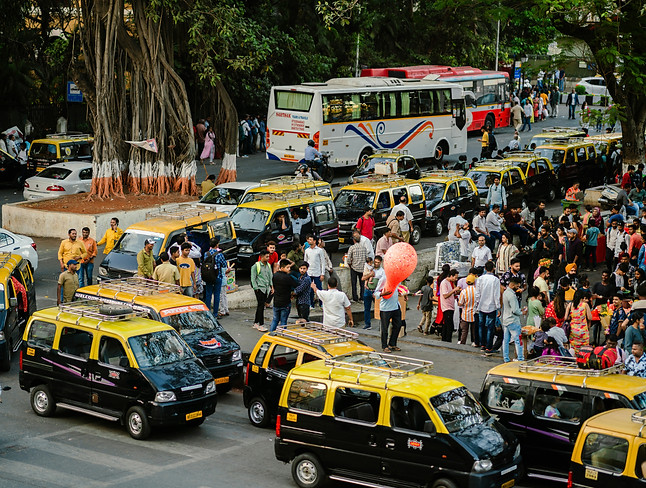
Image by Prince Prajapati

The Diary with a Lock

By Shlok Pandey

Kairav had everything—except a family

In the busy and bustling city of Mumbai, called “The City of Dreams,” arrived two ambitious people who were determined not to die as lower-middle-class individuals, as they had been born into this world. Soon after migrating to Mumbai from their towns to fulfil their lofty dreams, they put their noses to the grindstone. They could see nothing except the paramount goals they had to achieve and worked like machines day and night. Their sweat formed the steps of the ladder of success they climbed, and they never looked back. They were Yami and Om, and they were destined to be married in the near future.

​

They fell in love and soon got married. Initially, after getting along really well, the tables turned for them after they welcomed their only child, Kairav. Their marriage began to fall apart, and this was because when two ambition-driven souls clash, the result is always devastating—two swords can’t rest in the same shield.

​

“Well, you have to stay at home and look after your baby; that’s what all mothers do,” Om would start the heated arguments.

​

“In spite of leaving your village and being here in the metro, you now recall your ages-old patriarchal traditions?” Yami would react impulsively. “I’ve worked as hard as you have. I’ll do it if this will fill your egoistic heart with happiness but the fact is that he is not mine alone.  It is no crime to dismiss those orthodox beliefs. I truly  don’t give a hoot to them.”

​

“So now you want the head of a top pharmaceutical company to sit at home? Why are you so selfish? We are not handing him over to an aayah, as they are not safe, and my parents don’t favour them. So you have to, Yami, I suppose.”

​

Both always thought they were right. The initial affection of marriage was replaced with heated arguments and discord. They hid it all at public gatherings and appeared to be a happy couple to their friends and outsiders. 

​

The disagreements between them continued to increase. Yami was always bent towards being modern and progressive; however, Om’s thinking was stuck in the very orthodox beliefs of his parents, which education failed to change. Hence, they never agreed on a single topic and quarrelled daily. They would not talk to each other for days. However, in spite of arguing like cats and dogs on every issue, they both had made an unspoken pact- no matter how much they quarrelled, they would not separate because they had married each other against their parents’ will, and they could not even think of telling them about separation. Also, they thought that if they stayed together, their son would have a better life than he would if they separated. But would he, actually? They did not realise that their decision to forcibly stay together, would create an unhealthy environment for a child’s growth.  

​

Kairav grew up to be a person of high EQ. His extremely introverted and socially anxious nature left him with only two friends, with his diary as his best friend. He had a big diary with a small lock on it, and he hid the key in a very secret place because he could not afford for anyone to read his diary. He wrote his heart out, as he found it quite disrespectful to talk about his parents to his friends; hence, his diary was his only friend who would lend him an ear.

​

Dear Diary,

​

How I wish I could celebrate Holi like my other friends. For the past twelve years, I have had to give fake reasons for being locked up in my home when the entire country is busy celebrating festivals, throwing colours on one another and splashing together, living their lives to the fullest. All my other friends and families go to each other’s homes to celebrate this festival of colours. As for me, I am neither sent to anybody’s house, nor can I even dream of our family enjoying time together for a millisecond. My parents have had a fight with each other and are not on speaking terms. Nothing new there.  At breakfast, I saw both of them exchanging angry glances and stares full of hate. Silence, which prevails in funerals, is loudly heard in our house on the day when the entire world joyfully comes together to celebrate the most colourful and enjoyable time of the year.

​

Soon after breakfast, they went inside their rooms and celebrated the festival with a harsh conversation. They always fight in private, thinking I cannot hear, but they forget that they shout out loud enough while fighting, which doesn’t require any eavesdropping at all. This happens all the time, and when they’re done, they come out only to remain cranky the entire day, and I have to be as quiet as a mouse, or else I am the prey of their anger for doing nothing. This happens mostly at every festival.

​

I have to lie to my two friends all the time and make up stories about how well my family spent the holidays and celebrated the festivals, just like theirs. I wonder why I can’t enjoy life like other people can. Every festival, I envy the perfect families having a lot of fun because my family can’t, And what other option do I have? I am fed up with my isolated life. My parents hardly allow me to go out of the house, as they want to send me out of India to study and keep pushing me to excel in my studies and learning new skills.

​

I always wonder how it feels when your parents enjoy each other’s company. It must be an extraordinarily joyful feeling, which I have never ever felt at all. Someday will come, I think, when my family will perhaps go on outings and celebrate festivals and have fun and be like a normal family?

​

I have longed to say it out loud: “We are a family.” But my silent plea falls on deaf ears. I often wonder whether merely having all the members under one roof truly makes a family, when they remain strangers to one another. Am I the only one who feels there is a difference between being a normal family and merely acting like one, when in reality we are distant and disconnected? We stay together as normal families do, yet live lives that are awkward, abrupt, and quietly fractured. Sometimes, normality itself feels like a dream.

​

Kairav always wanted his family to celebrate just a few moments together—all three of them going to a place to visit and recreate themselves; eating some good food together at a nice and cosy fine-dining restaurant; even a family walk in the green gardens near their house, whose friendly tall trees produced a cool breeze, would be nice. All his efforts and planning shattered, always.

​

“Dad, Zoe went to the movies to watch the latest Marvel picture in 3D, and she says it’s fantastic. Let’s all go and watch it and have some Chinese food afterwards; we all will have a whale of a time.”

“Yami, take him to the mall on Sunday; he wants to watch a movie,” his father replied, calling out to his wife.

“Why won’t you come? Let’s all go together,” Kairav tried once again.

“You can go with your mom. I won’t come that day; I have work, though it is a holiday,” his father gave him a cold reply to his face.

​

He eventually grew disconnected from his family and found it difficult to be at home with either of his parents. No one really understood him, and because of a deep-seated reticence , he could not share his pain with anyone. He felt that  by spilling the beans to his friends, he would wrong his parents.

​

What he wanted during Christmas was his family together decorating a big Christmas tree accompanied by giggles and bonding, the illuminating colourful lights on green wreaths of the tree filling colours in their lives. But what he got in return was decorating the tree all by himself, centred in the middle of their home, where an unhealthy discord prevailed and a familiar pin-drop silence, loud enough in his ears, made him realise that the situation was not good for anyone’s well-being.

​

When Diwali came, he would be all alone in his bedroom, watching families decorate their houses with sparkling lights and beautiful rangolis, eating savouries and bursting crackers together with big, contented smiles and happy laughter, and the joyful screams of friends having a gala time celebrating the Festival of Lights—which makes relationships, bonds, and friendships brighter. But his family seemed an exception. He could only watch them hopelessly, as he could not leave his house or invite his friends, and the question of his family celebrating was foolish and out of the question.

​

Only his diary knew how he felt. He felt suffocated, wanting to run away from his present life of his parents fighting hundreds of times in front of their very sensitive son, who just wanted good bonding. He felt anxious all the time; his heart shattering inside even while he acted like his life was normal; he felt frustrated when he had to smile at the world when his life had no cheer at all.

​

People outside his house thought and said how lucky he was to have a perfect life—a big mansion, lots of money, and a nuclear family of three. Little did they know that it is not mandatory that a wealthy family is a contented family. He understood from a very small age that disunited members make up more of an asylum in the name of a home sweet home.

​

Time passed, and it definitely did not fly  as it does for some. Only he knew how he survived the Cold War in his home by following the path of silence and neutrality. Things remained as they were, aggravating his socially restrained nature. He grew up to be a bashful person with a crippled personality. He feared interacting with anybody and had the same two friends, and his diary.

​

Furthermore, he received complaints from his school and other relatives that his personality was far too lacklustre and restrained and needed a lot of improvement. His parents never tried to understand the reason behind this. Had they ever tried to understand the impact of unhealthy family relations on one’s development, or encouraged their son to talk or adjusted a little to give him a normal life with friends, happiness, and enjoyment, such a situation would never have arisen. But they were far too occupied with their occupations and arguing over millions of ideological differences.

​

Even Kairav was perplexed, as he himself did not know why he was the way he was. He only wanted to shut himself up all day or scribble in his diary, and if anyone came to their home, he would feel constrained and irritated by their existence and the few questions they asked him. Perhaps it was because he mostly remained quiet at home, studying the whole day or writing his heart out in his diary. He needed to change himself, he thought.

​

One of his aunts, his mother’s sister, had just married a man who was a child therapist. Her husband was habituated to hearing multiple cases similar to, as well as worse than, Kairav’s, including child abuse and many more. Kairav’s aunt told her husband about his unusual nature.

​

“There is something going on inside his head,” her husband said whenever the topic was raised.

​

Her husband, Dr Aaditya Mehta, then went to his parents and discussed the matter with them. Yami and Om mutually agreed—unexpectedly, after a long time—that they should send their only son to him for consultation and a solution.

​

“Now, be comfortable and tell me all your feelings—what goes on in your heart and head, how you feel,” Aaditya said to Kairav when he went for consultation. He was very shy and restrained initially.

​

“Tell me as if I were your best friend. Pour your heart out. If you do so, we will find a better solution for you, a better life than the one you live. Tell me everything and don’t keep anything hidden within you,” Aaditya told him.

​

So Kairav told him everything from start to finish, just as he used to write it down in his diary. He felt a bit lighter than before. Dr Aaditya understood him well because of his empathetic nature and soon worked out a good plan for him.

​

He visited Kairav’s parents and suggested what he believed to be the most viable solution for improving Kairav’s personality and overall well-being. He explained to Yami and Om that an unhealthy family environment severely hampers a child’s emotional and psychological development, often resulting in a restrained and stunted personality. Hence, sending Kairav to a hostel—surrounded by children his own age and away from the constant turbulence at home—would not only help shape his behaviour and confidence but would also allow him to live a fuller, healthier life.

​

He also explained to Kairav that many of his unfulfilled longings and quiet lamentations would ease with this new life, enriched by friendships and shared experiences. Though his dream of a happy family might never truly materialise, his own life, he assured him, would improve significantly.

​

Kairav’s father initially opposed the suggestion, but his mother understood her son’s silent suffering and stood by the decision. Kairav, though saddened by the thought of leaving his parents, found a strange comfort in the idea. It promised a life gentler than the one he had known—one where he could breathe freely. He could always return home during holidays; this, he told himself, was not a goodbye, but a beginning. And so, Kairav was enrolled in a hostel known for its exemplary education and nurturing environment.

​

The morning his parents dropped him off, silence followed them like a shadow. His parents were quiet, burdened by the realisation that they had given their child everything except the one thing that mattered most—a peaceful home. Kairav, too, was silent as he parted from them, carrying both sadness and a fragile hope within him. For the first time, he looked ahead, not back.

​

That sunrise marked the gentle entry of hope into his life. The pages of his diary turned, and on a blank page, he wrote the heading that held all his courage, all his longing, and all his resolve:

​

“A New Life.”

Image by Thomas Griggs

Shlok Pandey, is a youngster with a mind full of stories. He write to express originality and imagination. He says he writes fiction to bring fresh energy to every page with an aim of connecting with the hearts and emotions of the readers, and making his writing the bold voice of the next generation. 

​

​

  • Twitter
  • Facebook
  • LinkedIn
  • YouTube

©2021-22 by The Wise Owl.

bottom of page